|
|
|
President's Message |
|
|
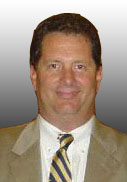
Dennis Healy
President
Los
Angeles
RIMS |
As our year
comes to a close, I want to focus on education, so this will
be our target for the next few months. Our Education Day is
scheduled for October 19, 2005. This year we are excited
about the ability to award Continuing Education credits for
attendees. |
The Education Day Committee, which consists of Todd Marumoto, Ruth Lindstrom, and Scott Ritto, has
exceeded all expectations this year. You can get more information on
this event in this newsletter.
|
|
In addition to
our annual Education Day, the chapter is working on a
scholarship program for the children of our members who will
be entering college. We hope to have a formal launch of this
scholarship program in the near future. If you have a child
who will be graduating from high school and will be
continuing his or her education, please look for the
announcement.
Continuing with
the education theme, all of us need to make sure we are
keeping up with our ever-changing profession. This is not
limited to formal classes. As Risk Managers we need to get
away from our desks, walk around, and see what is going on
out there. This is an investment you must make. Find time to
ride with a truck driver, or go along with a sales rep, and
see what these folks are doing. Go to your warehouse and be
seen. For those who have safety as part of their job, don’t
just show up for the training or inspections. Learn what the
employees do.
By the way, if
you have not been looking at the L.A. RIMS website, what are
you waiting for? This year we have added value to our
website. You can access many resources including job
opportunities as well as the membership application for the
chapter via a PDF file.
We continue to
try to improve our luncheon registration. For those who have
been inconvenienced, I apologize. We are transitioning from
a manual style to electronic. We hope to have the entire
process streamlined soon, including online registration and
payment.
Just a reminder
that ballots are on their way. Please vote for your 2006
board members and submit them as soon as possible.
Lastly, a
special thank you to all the volunteer board members. These
are the folks who have volunteered their time and talent to
this chapter. Thank you.
|
|
Dennis
Healy
L.A. RIMS
Chapter President |
|
|
|
|
Friends of RIMS Corner |
| |
|
Safeguards
for Directors and Officers |
|
Optimize the Protections Afforded by
Indemnification and D&O Insurance.
By John R. Musitano, Jr., Esq.
The widely publicized criminal
prosecutions and civil lawsuits targeting the executives of
such companies as Enron, WorldCom and Global Crossing have
highlighted the exposures faced by directors and officers to
even those uninitiated in the field of corporate risk
management. Directors and officers, as well as risk
managers hoping to protect their company’s assets and to
retain or attract highly qualified executives, need to
review and optimize directors’ best personal protections
against such claims: corporate indemnification and Directors
& Officers (”D&O”) insurance.
Indemnification. Often,
directors and officers believe that corporate
indemnification insulates them from lawsuits which target
them based on their role in the company. This is generally
untrue for several reasons. One, not all indemnification
provisions are the same. Indemnity language in a company’s
bylaws should be reviewed to determine if it is outdated or
written to afford less than the maximum protection available
under the law. Most states’ corporate statutes dictate when
a corporation is required to indemnify its directors and
when it is permitted to indemnify. A company’s
indemnification language may not be written broadly to
obligate the company to indemnify in the instances involving
permissible indemnity.
The second reason that
indemnification does not totally insulate a director is that
the law simply does not permit indemnification for certain
types of claims. Yet another consideration is even where a
company is committed to indemnifying its director, it may
not be able to by virtue of its financial condition and the
high expenses associated with these types of lawsuits.
D&O Insurance. D&O
insurance typically provides coverage for third party suits
naming the directors and officers personally. The policy
insures that a director will receive a defense to such suits
regardless of the company’s indemnity language or financial
condition. D&O policies include personal coverage for the
directors, known as “Side A” coverage, which is generally
triggered when a corporation is unable to indemnify. A
director will want to evaluate the limits and conditions
associated with this coverage, as well as whether the risk
of corporate insolvency necessitates the purchase of
standalone Side A coverage, referred to as excess Side A or
D&O difference-in-conditions coverage
The policies also include “Side
B” coverage, which provides reimbursement to the corporation
for the cost of indemnifying directors and officers. Such
coverage is as important to the financial protection of the
corporation as is the Side A coverage to the directors.
Without it, a company faces bearing on its own the onerous
expenses of D&O claims including, most significantly, having
to fund the defense of directors against claims falling
within the grant of indemnification. Accordingly, such
insurance should be obtained or, if already a part of a
company’s portfolio, reviewed to determine whether the
limits and coverage best suit the risks of the particular
company.
Considering the exposures faced
by its directors and officers to claims naming them
personally, as well as the financial burdens that a
corporation may shoulder with such claims, a risk management
program which balances strong indemnification with adequate
D&O coverage can ultimately reward both the directors and
officers and the
corporation.
|
|
(John
R. Musitano, Jr., Esq. is a litigator with Cox, Castle & Nicholson
LLP whose practice emphasizes risk management and insurance
coverage. He may be reached at (310) 284-2212 or jmusitano@coxcastle.com.) |
|
|
|
|
|
|
Calendar of Events |
|
|
|
▌ |
October
19, 2005
Education Day Conference
Continuing Education Credits
Education Day offers the opportunity to acquire continuing
education credits for State of California licensed insurance
agents/brokers. Individuals can earn up to three hours of
credit by attending the sessions. |
|
|
Venue:
The New Otani Hotel |
|
|
Timings:
Registration: 7:30 am – 8:30 am
Program: 8:30 am – 1:30 pm |
|
|
Registration Fees:
$100 Early Registration
$115 Walk-In
Registration
$45 Lunch Only |
|
è |
Click here for more information
|
|
|
|
▌ |
November 7 - 8, 2005
LA RIMS Fellow Workshops
Disaster Planning/Business
Continuity Planning and Management
Managing the Disaster
Attend the workshop and learn the elements of a disaster
plan and the principles of contingency planning and bring
new skills, including media management and product recall,
back to the workplace. You will learn all the aspects of how
to plan for a quick recovery when a disaster happens.
Workshop credit towards the RIMS Fellow designation is being
given for participation in this workshop by RIMS.
Individuals may attend the workshop without working toward
the designation. |
|
è |
Click here for more information |
|
|
|
▌ |
November 16, 2005
Annual Meeting |
|
|
|
|
▌ |
December 7, 2005
Holiday Party
Jonathan Town Club
Reception: 5:30 – 6:30 p.m
Dinner: 6:30 – 9:30 p.m. |
|
|
|
|
|
|
|
|
|
|
New Position Postings |
|
• National
Risk Mngt.
Coordinator |
|
•
Director of
Risk Mngt.
Services |
|
•
Claims
Manager |
|
•
Senior
Risk Manager, |
|
•
VP, Risk
Management |
|
•
Risk
Management Specialist |
|
•
VP, Sales &
Marketing, |
|
•
VP, Risk
Management |
| |
|
|
To view
all job opportunities in their entirety, please use
this direct link to the LA RIMS website.
|
|
|
|